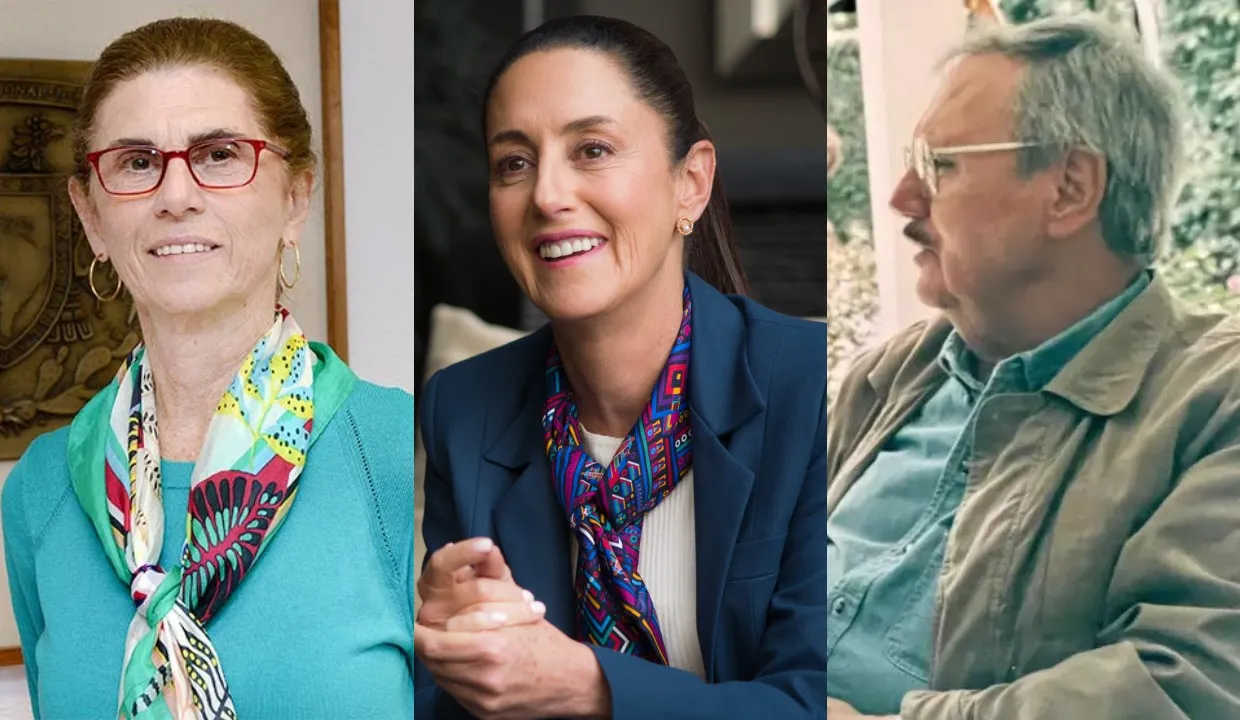
Carlos Sheinbaum Yoselevitz: Life, Career, and Legacy of a Mexican Chemical Engineer and Businessman
Carlos Sheinbaum Yoselevitz was a respected Mexican businessman and chemical engineer whose work left a lasting mark on the country’s industrial sector—particularly in the leather tanning industry. While many people recognize him today as the father of Mexican president Claudia Sheinbaum, his own life story is rich with professional achievements, intellectual pursuits, and a deep commitment to family and education.
Born in 1933, Carlos lived through decades of transformation in Mexico, witnessing economic growth, industrialization, and political change. He played a key role in modernizing aspects of the leather industry through his technical expertise, all while raising a family that would go on to contribute significantly to public life and academia. His legacy is not only defined by business success but also by the values he instilled in those around him.
Quick Bio
| Full Name | Carlos Sheinbaum Yoselevitz |
| Date of Birth | February 25, 1933 |
| Age | 80 years (at the time of death) |
| Birthplace | Mexico |
| Nationality | Mexican |
| Profession | Chemical Engineer, Businessman |
| Height | Not Publicly Available |
| Weight | Not Publicly Available |
| Parents | Not widely documented |
| Siblings | Not widely documented |
| Relationship Status | Married |
| Spouse | Annie Pardo Cemo |
| Children | Claudia Sheinbaum |
| Net Worth | Not publicly disclosed |
Early Life and Background
Carlos Sheinbaum Yoselevitz was born on February 25, 1933, in Mexico into a family with European roots. His surname reflects Jewish heritage, tracing back to Eastern Europe. Like many families who migrated to Latin America during the early 20th century, his ancestors sought stability, opportunity, and a better future.
Growing up in Mexico during the 1930s and 1940s meant experiencing a country still finding its footing after the aftermath of the Mexican Revolution. This era was marked by social reforms, industrial beginnings, and a strong emphasis on national identity. Carlos was raised in a time when education and discipline were seen as essential tools for progress.
Though detailed accounts of his childhood remain relatively private, it is clear that he was brought up in an environment that valued knowledge, perseverance, and intellectual curiosity. These qualities would later define his academic and professional life.
Education
Carlos Sheinbaum Yoselevitz pursued higher education in chemical engineering, a field that was becoming increasingly important as Mexico expanded its industrial base. His academic journey reflected a deep interest in science, chemistry, and applied engineering.
Chemical engineering is a discipline that blends scientific principles with practical industrial applications. For Carlos, this meant not only understanding chemical processes but also finding ways to improve production efficiency and product quality in real-world industries.
While specific details about the institutions he attended are not widely documented, it is widely acknowledged that he received a solid technical education that prepared him for a successful career in manufacturing and industrial processes.
His education laid the groundwork for his later contributions to the leather tanning industry—a sector that requires precise chemical treatments and innovative solutions to maintain quality and sustainability.
Career Journey
Entry into the Industrial Sector
After completing his education, Carlos Sheinbaum Yoselevitz began his career in the industrial sector, where his expertise as a chemical engineer quickly proved valuable. Mexico, during the mid-20th century, was undergoing significant industrial growth, and professionals like Carlos were at the forefront of this transformation.
He found his niche in the leather tanning industry, an area that relies heavily on chemical processes to convert raw animal hides into durable leather products. This industry was crucial in Mexico, supporting both domestic markets and exports.
Contributions to the Leather Tanning Industry
Carlos became known for his innovative approach to leather tanning. The process of tanning involves treating animal hides with chemicals to prevent decay and improve strength, flexibility, and appearance. It is both an art and a science, requiring careful balance and precision.
Through his work, Carlos helped improve production methods, focusing on efficiency and quality. His contributions likely involved optimizing chemical formulations, reducing waste, and enhancing the durability of leather products.
At a time when environmental concerns were beginning to gain attention, professionals in chemical engineering played a key role in making industries more sustainable. While detailed records of his specific innovations are limited, it is reasonable to understand that his work contributed to modernizing the sector.
Business Leadership
In addition to his technical expertise, Carlos Sheinbaum Yoselevitz was also a businessman. This dual role allowed him to bridge the gap between science and commerce—a valuable skill in any industry.
As a businessman, he would have been involved in managing operations, overseeing production, and ensuring that his enterprise remained competitive. His ability to combine engineering knowledge with business acumen made him a respected figure in his field.
His work not only supported economic growth but also provided employment opportunities, contributing to the broader development of Mexico’s industrial landscape.
Personal Life and Family
One of the most defining aspects of Carlos Sheinbaum Yoselevitz’s life was his family. He was married to Annie Pardo Cemo, a distinguished academic and scientist known for her work in biology.
Together, they created a household deeply rooted in education, intellectual curiosity, and social awareness. Their home environment encouraged learning, critical thinking, and a commitment to making a positive impact on society.
Fatherhood and Influence
Carlos is perhaps best known internationally as the father of Claudia Sheinbaum, who made history as the first woman elected president of Mexico.
Claudia’s achievements in politics and science reflect the strong foundation provided by her parents. Growing up in a home where both parents were accomplished professionals, she was exposed to academic rigor and social responsibility from an early age.
Carlos’s influence on his daughter can be seen in her analytical approach to problem-solving and her emphasis on evidence-based decision-making—qualities often associated with scientific training.
Family Values
The Sheinbaum family valued education, culture, and social engagement. As a father, Carlos emphasized the importance of discipline, integrity, and hard work. These values were not only taught but also demonstrated through his own life.
Despite his professional commitments, he maintained a strong connection with his family, supporting their aspirations and encouraging their growth.
Net Worth and Lifestyle
Carlos Sheinbaum Yoselevitz’s net worth was never publicly disclosed, which is not uncommon for individuals who worked primarily in industrial and private business sectors.
However, it is clear that he enjoyed a stable and comfortable lifestyle, thanks to his successful career as a chemical engineer and businessman. His wealth was likely derived from his involvement in the leather industry and related business ventures.
Unlike many public figures, Carlos maintained a relatively low profile when it came to personal wealth and lifestyle. He focused more on his work and family rather than public displays of affluence.His lifestyle reflected practicality and intellectual engagement rather than extravagance—a trait often seen in individuals with strong academic and professional backgrounds.
Legacy and Impact
Carlos Sheinbaum Yoselevitz’s legacy extends beyond his professional achievements. While he made important contributions to the leather tanning industry, his greatest impact may be seen in the lives he influenced—particularly within his family.
His daughter’s rise to national and international prominence has brought renewed attention to his life and values. Through her work, the principles he upheld—education, scientific thinking, and social responsibility—continue to shape public policy and discourse.
Carlos represents a generation of professionals who helped build modern Mexico through dedication, expertise, and innovation. His story is a reminder that progress often comes from the steady efforts of individuals working behind the scenes.
Interesting Facts
- Carlos Sheinbaum Yoselevitz had Jewish heritage, with roots tracing back to Eastern Europe.
- He was both a chemical engineer and a businessman, combining technical knowledge with entrepreneurial skills.
- He contributed significantly to Mexico’s leather tanning industry, an important sector in the country’s economy.
- He was married to Annie Pardo Cemo, a respected scientist.
- His daughter, Claudia Sheinbaum, became the first female president of Mexico.
- He lived through major historical changes in Mexico, from post-revolutionary rebuilding to modern industrialization.
People Also Ask
Who was Carlos Sheinbaum Yoselevitz?
Carlos Sheinbaum Yoselevitz was a Mexican chemical engineer and businessman known for his contributions to the leather tanning industry. He is also widely recognized as the father of Claudia Sheinbaum.
What was Carlos Sheinbaum Yoselevitz’s profession?
He was a chemical engineer by training and a businessman by profession, working primarily in the leather tanning sector.
How is Carlos Sheinbaum related to Claudia Sheinbaum?
Carlos Sheinbaum Yoselevitz was the father of Claudia Sheinbaum.
What industry did Carlos Sheinbaum work in?
He worked in the leather tanning industry, where he applied chemical engineering principles to improve production processes.
Was Carlos Sheinbaum Yoselevitz a public figure?
No, he was not a public figure in the traditional sense. He gained wider recognition due to his daughter’s prominence in politics.
What is Carlos Sheinbaum Yoselevitz’s legacy?
His legacy lies in his contributions to industry, his role as a father and mentor, and the values he passed on to his family—particularly his emphasis on education and scientific thinking.